|
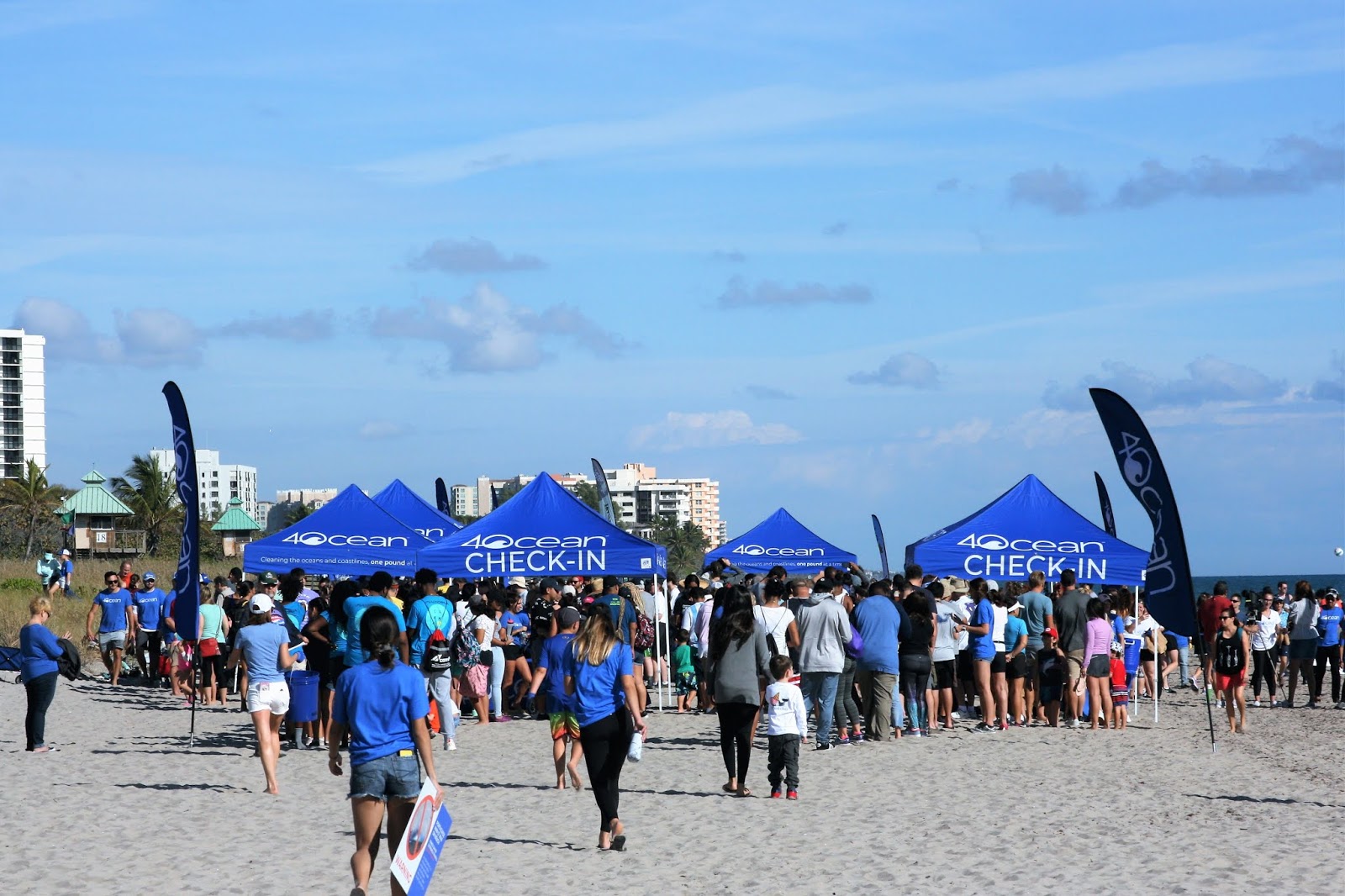
| photo by Kirsten Jones - beautiful shot taken in Boca Raton, FL |
Many moons ago, a professor referred to the anemone as "charismatic macro fauna". He was, and still is, a marine plant and algae guy. Some animals are definitely more attractive to the general population of humans just as some species have a bad rap and strike fear in others. I have close friends who freeze at the sight of a spider or snake, even if it is just a still photo or on television. I have family members who do not venture into the ocean for fear of sharks (making my married last name even more ironic!) or jellyfish. There are also good friends in my circle who literally breed reptiles of all sizes, so I like to think of myself as being well rounded in my love/hate relationships with animal species.
...Except for scorpions.
...Not cool with scorpions.
Sea turtles are certainly one of those creatures who have the "charisma" stated by my former instructor. Today enjoy some background into the world of one particular sea turtle species. This post does not give all the general information on sea turtles, their life cycles, and information of that sort. I have decided today to be specific and give those who may already have a love for the marine turtle some knowledge that goes a little deeper. Plus, at the end enjoy a BONUS! I received such wonderful feedback about Jellyfish 101 and Evan Orellana's paper, that this time my friend and colleague Cody Mott has agreed to share some of his turtle research with us. Enjoy!
Green Sea Turtles 101:
 |
| Happy Birthday, little green turtle! |
General consensus in the scientific community is there are seven different species of sea turtles: The Loggerhead, Leatherback, Hawksbill, Kemp's Ridley, Olive Ridley, Australian Flatback, and the Green. There is one noted sub-species to the Green known as the "Black" sea turtle if you really want to get technical.
Most of those species are found in Florida waters at some point in their life cycle, and today the focus is one particular species - the green sea turtle (
Chelonia mydas). Greens nest here in Florida, and are also found in local waters as juveniles, feeding on plants and grasses. There is even a species known as "turtle grass" (
Thalassia testudinum). This last fact is especially cool when you look at the classification of the sea turtle:
Kingdom - Animalia (animals)
Phylum - Chordata (vertebrates)
Order -
Testudines
So, the plant is quite literally named after turtles - even in Latin!
Why are they called "green" turtles? Especially as adults, green sea turtles are vegetarians, and just like a flamingo turns pink from eating shrimp, the body fat of these turtles is tinged green from all the plant consumption. Cool. Ew. No... Cool.
Where do they nest? Green sea turtles are found all over the world, partly in fact due to their migration routes that expand for tens of thousands of miles. The "long road home" takes on a whole new meaning as this species, along with all other marine turtles, swim back after nearly 30 years to the original beach of their birth. Florida happens to be a nesting hot spot and considering this species has had some serious downs (endangered status) along with great research and conservation efforts, nesting is back on the rise. While an individual turtles may nest as many as 5 times in one season, that takes such a toll on the animal that she doesn't return to the beach the following year. That means a bi-annual pattern of high and low nesting seasons for greens has developed. Plus, with that really long swim mentioned earlier, just trying to get back every single year to nest would be extremely difficult.
 |
| Green turtle track with a distinct tail drag down the middle |
These ladies seem make HUGE nests with deep body pits, and often work their way well into the dune vegetation. A variety of theories are out there as to why this occurs, including that turtle-momma might be nesting as far from the high tide line as possible to avoid her nest washing away during its 60+ day incubation. Here in Florida, though, when up in the dune vegetation beware of FIRE ANTS. These invasive insects have been regularly documented killing hatchlings (baby turtles) by swarming nests.
 |
| Big turtle = BIG PIT |
During my years of nesting surveys, I found green turtles occasionally spend so much time nesting (digging, laying eggs, and covering the evidence) that they were still on the beach after dawn. This also led to me learning exactly how far those flippers actually spray sand while covering their nest. I stood behind the lovely female below only to be knocked over by the sand blast!
 |
| The 3 stakes in front of this turtle mark a loggerhead nest laid that same night. The tracks from that nest are still visible. |
Similar to loggerheads and hawksbills, green turtle eggs are roughly the size of a ping pong ball. Green nests are usually larger though, which makes sense as this is a much larger species of turtle. The average green turtle nest has 120 - 150 eggs, with my personal highest count being 174 eggs in one nest.
How big do greens get? This particular species of turtle can easily grow anywhere from 250 - 400 lbs (110 - 190kg) on average. The largest green turtle documented was 5' long and 870 lbs.
How to identify a green from another species: Green sea turtles are distinct in a few ways. When looking head-on, there is only one pair (i.e. 2 total) scales between the eyes. Most turtle species have two pair in that location.
 |
| The 2 Pre-frontal scales between the eyes are unique to green sea turtles |
When looking at the carapace, or top shell, greens have four scutes on each side, and five down the middle. Their shells may vary in color from green to yellow. Their shells are usually clean, especially compared to loggerhead turtles; they are even documented on reefs at "cleaning stations" where fish or other symbiotic critters come out to help keep the turtle looking shiny. Picture the "car wash" in the movie
A Shark's Tale and you will get the basic, albeit far more musical, concept.
 |
| Juvenile Green Turtle - Carapace View |
Green sea turtles are on the rise, but were once a critically endangered species here and in other parts of the world. Why? Think about it... this animal is
named after the color of its
meat. That would be like referring to cows as "red" cattle. Humans ate them, and in some areas and cultures still do. The Cayman Turtle Farm in the Cayman Islands participates both in research and restaurants. Sea turtles are a part of the lifestyle there; while I have never (and doubt I ever could) eaten turtle of any kind, I do have to slow down and understand that my culture is not the same for everyone. I do eat meat. Some humans have chosen a life as a vegetarian or even gone a step further as purist vegan. No judgement, except on to-fur-key. If you have never heard of it, good for you. Sorry, vegans. But I digress...
Turtle canneries went out of business long before sea turtles were added to the endangered species list in 1978. This was due to overfishing practices. Research and conservation efforts have been in full swing almost ever since. The point is humans should take responsibility and always tackle feeding our race while keeping sustainability in mind.
Ouch! (I just twisted my ankle jumping off the soap box)
If there is some burning question you have about greens or any sea turtle species, feel free to ask! I'll be happy to share what I know as fact, or else I will find the right answer for you!
BONUS ROUND!
I consider myself lucky to have acquired many wonderful friends and colleagues over the years, and Cody Mott is no exception. I have the honor of bragging that I knew him before completing his Bachelor's and Master's degrees, before his work at Inwater Research, and now even before his marriage to another awesome friend- Rebecca. Cody's Master's thesis focused on one behavioral aspect of the green sea turtle. While all sea turtles must orient themselves to reach the ocean as hatchlings, animals with large migration routes must also be capable of finding their way through a multitude of habitats without getting lost. Cody worked closely with one aspect of green turtles and their ability to find direction using the sun as a compass. Many of the behavioral studies on sea turtles focuses on the green. This is because the general consensus among those working with marine turtles on a regular basis is that the green is the most intelligent among the lot. They are usually the ones trained first in captive settings and personally, I find them the prettiest (sorry, hawksbills). I am also aware that the last fact is completely unrelated, but thought you should know anyway!
 |
| Don't those eyes look intelligent to you? |
Sun Compass Orientation in Juvenile Green Sea Turtles (Chelonia mydas)
CODY R. MOTT and MICHAEL SALMON
Department of Biological Sciences, Florida Atlantic University, Boca Raton, Florida 33431 USA
[
codyrmott@hotmail.com;
salmon@fau.edu]
ABSTRACT. – Juvenile green turtles occupy home ranges on shallow reefs that parallel the
southeastern coast of Florida. When disturbed, the turtles often flee eastward toward deeper water. We captured turtles at night and recorded their orientation during the next 2 days while they swam tethered inside a large circular outdoor pool and were exposed to the sun. The turtles from 2 reef sites were significantly oriented eastward. After 7–10 days of exposure to a laboratory photocycle advanced by 7 hours, turtles tested in the same pool were significantly oriented westward, the predicted direction if they used the sun for orientation. Westward orientation was unaffected by placing either disc magnets or brass discs of identical mass above the turtles’ heads. These results are consistent with the hypothesis that orientation under clear skies is preferentially based upon solar cues. However, control turtles exposed for 7–10 days to a photocycle advanced by 1 hour were also expected to swim generally eastward, but, for unknown reasons, failed to show significant orientation. Our results therefore support the hypothesis that the sun is used as a compass, but additional experiments will be required to provide definitive evidence.
To learn more about Cody's research, or to acquire the complete paper, contact him directly or contact myself through this blog and I will be happy to help. He now works with a fantastic organization called Inwater Research Group. To learn more about their (and Cody's) current work, check out the website: http://www.inwater.org.
For general facts about sea turtles, to learn more about the conservation and research going on throughout the entire world, I highly recommend the following sites:
http://www.seaturtle.org/ or http://www.conserveturtles.org/ The latter was formerly the Caribbean Conservation Corporation and is most useful when looking into research done in that region of the world. I hope this post has helped you get to know and love one of my favorite species just a little bit more!
Just keep swimming!
-Callie Sharkey